Monday, February 9, 2026

The Dignity Index when Disagreeing


Doing Disagreement Better


Perfectionism

 "The Perfect Problem"

By Brooklyn Hughes Roemer (BA ’22) in the Spring 2025 Issue, BYU Magazine

Jenet Jacob Erickson (BS ’97, MA ’00), a religion professor and family life researcher, says parents can watch how their children respond to failure. “Are they really dysregulated by what they perceive as failure?” Nobody likes failing, but especially strong reactions—be they tantrums, panic attacks, or depressive episodes—can signal that perfectionism is at play....

“Kids are really perceptive,” Erickson says, and they can inherit unhealthy perfectionistic mindsets from their parents: “When parents have high expectations for their children, frequently express criticism or disappointment, and then withdraw love by either not being as happy, not being as loving, not being as connected, then children are more likely to develop toxic perfectionism.”

The Answer is Always Jesus

" Jesus is the Answer"

By Kevin R. Duncan (BS ’91, MACC ’91, JD ’91) in the Spring 2025 issue, BYU Magazine

Have ye any that are sick among you . . . or that are afflicted in any manner? Bring them hither and I will heal them. [3 Ne. 17:7; emphasis added]...

 The Church isn’t a showroom for the perfect. It’s a hospital for the spiritually weary, for the lonely, and for anyone who feels like they don’t belong—which I now realize is just about everyone at some point in their life....

My friends, your challenges might not look like mine did, but the answer is always the same: the answer is Jesus Christ. Every challenge you will face is an opportunity to draw closer to the Savior and see Him perform miracles in your life....

Brothers and sisters, the Savior’s tender invitation echoes through the ages: “Have ye any that are sick among you . . . or that are afflicted in any manner? Bring them hither and I will heal them.”

His power to heal extends far beyond physical ailments; it reaches into the depths of our hearts, restoring hope, peace, and strength.

Tuesday, February 3, 2026

When we Struggle...


Where Sin Causes Chaos, Christ Brings Peace

Promising in the Abrahamic Covenant


Seeking Christ and Covenants: Nephi’s Keys to Reading the Old Testament

Being Grateful in our Circumstances

 Elder Dieter F. Uchtdorf of the Quorum of the Twelve Apostles has perfectly described what I experienced: “When we are grateful to God in our circumstances, we can experience gentle peace in the midst of tribulation. In grief, we can still lift up our hearts in praise. In pain, we can glory in Christ’s Atonement. In the cold of bitter sorrow, we can experience the closeness and warmth of heaven’s embrace.”

Dieter F. Uchtdorf, “Grateful in Any Circumstances,” Liahona, May 2014, 75.

Peace and Joy, Not Grief, Dominated My Heart. Why?

Only God Can Condemn His Chosen Servants


Faithfulness and Prophets—Past and Present

Harder to Discern Truth


Safety in the Restored Gospel of Jesus Christ

Lucifer Rebelled


Partakers of the Divine Nature

(2 Peter 1:4)

Tuesday, January 20, 2026

The Lord Proves Us to Strengthen Us


“The Lord proves us ... to strengthen us. That proving does not come in moments of ease or comfort. It comes in moments when we feel stretched beyond what we thought we could bear. The Lord teaches that we are to continue to grow and never tire in our efforts, that we never give up, that we keep trying.”
Henry B. Eyring
Proved and Strengthened in Christ,” general conference, Oct. 2025, Gospel Library

Monday, January 12, 2026

Peacemaking During Conflict

 Peacemaking, she insists, isn’t stepping away, being quiet, letting things lie, bottling up feelings, or backing out of disagreements. “Peacemaking is not pacifism,” Taylor says. Peace is made; it is active and creative. Peacemakers, adds Witesman, are builders. “They’re actively building a vision of the world while also lovingly working with people who share a different vision of the world.”...

“Contention is when you have hostile feelings,” notes Taylor. “The fact that there are incompatible goals stirs up very negative emotions. The Book of Mormon often describes people ‘stirred up to anger’—that’s contention.” Conflict arises everywhere—even among disciples. But Taylor says we can learn to keep from being contentious....

 “We really get into problems,” he says of political disagreements, “if we think of ourselves as Republicans or Democrats first, as opposed to children of God.” Elevating other labels, political or not, above that primary identity divides and obscures. “Heading into a divisive election year, we need to remember who we are and who everyone else is.”...

What Do You Need?

Begin any conversation regarding conflict or disagreement by considering what you need from the discussion. What’s the goal of addressing the issue? Is there something you need the other person to understand, do, or change as a result? Taylor says to express that need directly: “Express a personal feeling, tag it with a need, and make a specific, concrete request.” 

She gives the example of finding out her son wasn’t doing his math homework. She was tempted to just send a blunt text: “Do your homework.” Instead, she first communicated her needs: “I’m concerned that you’re not doing your math. I need to know that you’re fulfilling your school obligations before doing other things. Will you be sure to get your homework done first before you head out with friends tonight?” 

Make Generous Assumptions

Approach disagreements with openness and optimism. Assume “that the other side has good intentions,” says DeTienne. Her recent research shows that assuming good intentions is more likely to lead to win-win outcomes—and to keep both parties on their best behavior. 

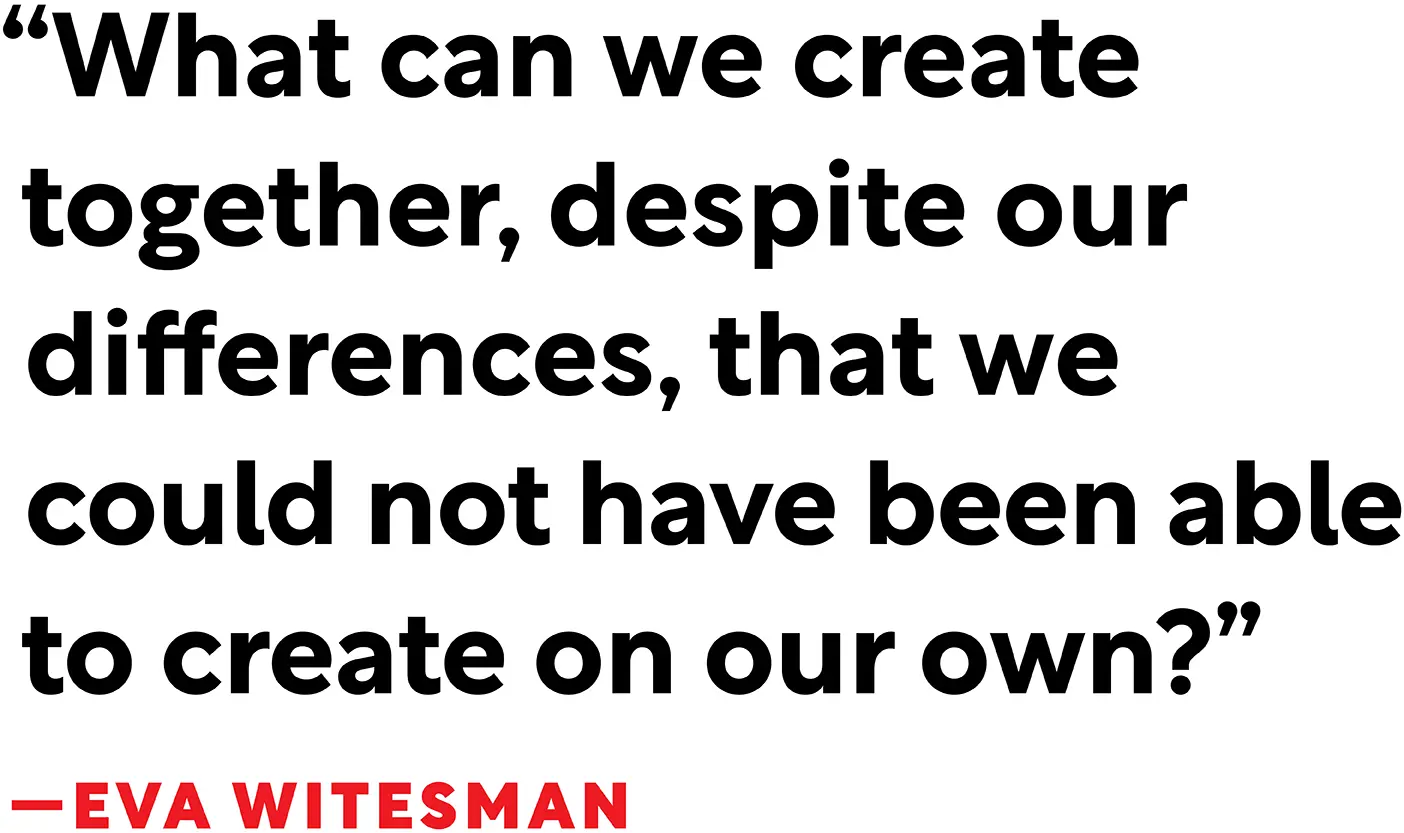
Words: "What can we create together, despite our differences, that we could not have been able to create on our own? —Eva Witesman"

As you ask questions and listen to the responses, be curious. “You might say, ‘Hey, I’m curious about what it’s like to live on the Arizona border with immigration from Mexico. I don’t have that experience. Can you tell me what that was like for you?” suggests Taylor. Ask follow-up questions, seeking to understand instead of to argue. “As people share, you don’t have to agree with them, but you may recognize the logic behind why they believe what they do,” Taylor says. 

As they share, listen. “Don’t think about what you’re going to say next,” adds Hawkins. “You’re not trying to ask questions that trip somebody up or that prove a point. Instead, ask, ‘So how did you come to that view? Tell me more about why you think that.’” ...

And he says we should be on guard against defensiveness: “When our worldview is challenged directly, . . . the gut reaction is defense”—we build walls, verbally attack, and dismiss the other person. A better way: simply validate the other person’s experience and remember their dignity as a child of God. Wade into the discomfort and see what you can learn. ...

A Conversation Worth Having?

Not every disagreement needs to be addressed. When the topic isn’t important to you and the relationship isn’t close, it’s fine to avoid. For example, if your cousin wants to discuss a favorite political conspiracy at dinner, you might choose to step away rather than engage. In situations like these, Taylor pulls out her go-to line: “That’s a really tough topic. I don’t think I’m prepared to talk about that right now.”

Illustration of a speech bubble with a fire symbol and a human figure escaping.

If a situation becomes unsafe, it’s not worth having the conversation. If there’s intoxication or threats of violence, walk away. “If people are swearing, name-calling, or attacking, exit the conversation immediately. Same if they keep asking baiting questions,” Hawkins says. “These conversations are not meant for toxic situations.” Nor are they meant for abusive or unhealthy relationships, which are best mediated by a therapist....

Ask Permission

Before you launch into a debate with a neighbor about the candidate on their yard sign or initiate a discussion with your spouse about their approach to discipline, Hawkins recommends pausing to ask for permission to engage. She suggests something like: “Can I ask you a few questions about your perspective? I’d really like to understand where you are coming from.” This approach, she notes, puts people at ease and signals that you aren’t there to force or mock or manipulate. And if the other person is not prepared to talk, you may need to schedule an important conversation for later—for example, after your spouse has a chance to decompress after work....

Mind the Temperature

It doesn’t take much for conflict to flare into full-blown contention. “Be really careful about anything you do that seems to be aggravating the situation or escalating the conflict,” says DeTienne. Her research shows that conflict can be cyclical, building on itself. “Aggravating behavior tends to escalate the conflict. Be careful about your part in that.”

If you feel your heart rate rising, if you’re feeling emotionally unable to converse respectfully or are feeling attacked, Witesman says it might be time for a break. “In the heat of the moment, it’s good to take a pause and step back,” she says. You might need some physical space or to take a minute to mentally gather yourself before continuing....

When a conflict becomes contentious, Glade encourages apologizing in the moment. She recommends starting with something like, “Now I’m saying things that aren’t reflective of my goal. Can we start this again? I’ve said some things I need to apologize for.”...

 “If it’s a severe hurt, assume that it’s going to take some time to repair.”

Sometimes you are the injured party. “Forgiveness is peacemaking,” says Witesman. “Forgiveness doesn’t mean permission or access to hurt me again or that I now agree with your viewpoint. Forgiveness sets down the burden of anger and pain and allows the Savior to handle those things, freeing you to be a peacemaker and to have empathy.”...

aw student Jenneka Lindorf Austen (BS ’99, JD ’24), a mediator at the Center for Peace and Conflict Resolution, says speaking to understand and be understood—rather than to persuade—opens hearts. “When someone feels like you’re just trying to persuade them, they’re going to resist. But when people feel understood, they’re way more likely to come your way and find resolution, oddly enough.”

Hawkins suggests using “I statements.” For instance: “I’m worried about what’s happening to the Great Salt Lake,” rather than, “If you don’t stop using so much water, the Great Salt Lake is going to dry up.” Use phrasing such as, “from my perspective,” “I see it this way,” and “in my experience,” rather than presenting your side as the absolute truth. “Mention areas of agreement if you see them,” she adds. “Share life experiences and personal stories.” 


https://magazine.byu.edu/article/blessed-are-the-peacemakers/

Fully Recognizing the Blessings of the Temple


Meeting Jesus in the House of the Lord

October 10, 2023

Fully Benefit from the Temple Experience

Several years ago I read a book entitled The Temple: Where Heaven Meets Earth,28 written by the late Truman G. Madsen, who spent much of his life studying about the ordinances and covenants of the temple. In that book, Brother Madsen identified three things that he felt at one time prevented him from fully benefiting from the temple experience. I feel impressed to share them with you today, especially to help those who go to the temple out of a sense of duty but who wonder if they are missing out on something.

Please know that the Lord loves you for your faithfulness in coming to His house, even if you have not yet had the experience for which you have hoped, fasted, and prayed. You are in many ways like Adam when the angel asked him: “Why dost thou offer sacrifices unto the Lord? And Adam said unto him: I know not, save the Lord commanded me.”29 Because of Adam’s continued obedience, the Lord instructed the angel to teach Adam why he was commanded to offer sacrifice.30 I believe that the Lord will treat you in a similar fashion, including sending angels if necessary to teach you. The Lord was serious when He promised “that all people who shall enter upon the threshold of the Lord’s house may feel [His] power, and . . . acknowledge that . . . it is [His] house.”31

1. Study the Scriptures About the Temple

Now, back to the counsel given by Brother Madsen in his book. The first challenge he identified as preventing him from fully recognizing and receiving the unique blessings of the house of the Lord—or, as the great patriarch Jacob described it, “the gate of heaven”32—was that he had never made the effort to “carefully read the scriptures about the temple.”33

I too have learned that the best source of insight and understanding about the temple comes from a careful, temple-focused study of the scriptures.34 For example, let me share three scriptures that might help you gain a greater appreciation for the significance of the anointing that occurs in the temple:

1. “And [Moses] poured of the anointing oil upon Aaron’s head, and anointed him, to sanctify him.”35

2. “Then Samuel took a vial of oil, and poured it upon [Saul’s] head . . . , and said, . . . The Spirit of the Lord will come upon thee, and thou shalt prophesy with [the company of prophets], and shalt be turned into another man.”36

3. “Samuel took the horn of oil, and anointed [David] in the midst of his brethren: and the Spirit of the Lord came upon David from that day forward.”37

For those who are seeking to understand and connect with temple ordinances in a more meaningful way, spend more time reading the scriptures that talk about the temple and temple ordinances. If you do, you will be amazed what the Lord will reveal to you. After all, He is a God who has promised to reveal “all things pertaining to [His] kingdom” to His covenant children.38

2. Sacrifice Your Sins on the Altars of the Temple

The second problem that Brother Madsen identified was that he was “afflicted with various kinds of unworthiness and not too anxious to change all that.”39 The Lord has declared the following: “I give unto you . . . a commandment that you . . . sanctify yourselves; yea, purify your hearts, and cleanse your hands and your feet before me, that I may make you clean.”40

President Henry B. Eyring has taught that “if you or I should go to the temple insufficiently pure, we would not be able to see, by the power of the Holy Ghost, the spiritual teaching about the Savior that we can receive in the temple.”41 So repentance is essential to temple revelation and temple revelation is essential to the change that we all should experience from meeting Jesus in the temple.

Weekly participation in the ordinance of the sacrament can also help us become and remain clean. When we partake of the sacrament worthily, we renew among other covenants the baptismal covenant, and the Lord renews the cleansing that occurred when we were born of the water and of the Spirit. I believe that approaching the sacrament with greater reverence is essential if we desire to become more worthy of temple revelation.

The two covenant moments, that of the sacrament and the temple, are inextricably connected. Both point us toward the Savior and His atoning sacrifice. If we listen to the Spirit as we partake of the sacrament, it will whisper to our spirits what it is that we need to change to benefit more fully from our time in the temple. When that happens, we have two choices. We can seek to cover our sins as Adam and Eve sought to cover their nakedness with fig leaves,42 or we can do as the father of King Lamoni did and “give away”43 all those sins the Spirit has called to our attention. Being willing to sacrifice our sins—to effectively place them on the altars of the ­temple—can result in our having the same experience in the house of the Lord that Joseph Smith and Oliver Cowdery had in the Kirtland Temple when the Lord declared, “Behold, your sins are forgiven you; you are clean before me; therefore, lift up your heads and rejoice.”44

3. Seek the Spirit to Understand What the Lord Is Trying to Teach You Through Symbols

The third obstacle Brother Madsen identified was that he “had a built-in hostility to ritual and to symbolism.”45 It is okay to admit that when we first experienced the ordinances of the temple, the ritual and symbolic aspects of the ordinances were a little confusing and may have made us feel a little uncomfortable. But that initial reaction doesn’t mean we should abandon our efforts to understand what it is the Lord is trying to teach us or, more importantly, bestow upon us. As President Nelson has taught, “If you don’t yet love to attend the temple, go more often—not less.”46 And, I would add, along with increasing your frequency, go to the temple seeking Jesus.

The Lord has declared that

this greater priesthood administereth the gospel and holdeth the key of the mysteries of the kingdom, even the key of the knowledge of God.

Therefore, in the ordinances thereof, the power of godliness is manifest.47

The beautiful symbolic aspects of temple ordinances can help us understand and feel the literal power of godliness inherent in those ordinances. They are not of recent vintage but rather were “ordained and prepared [by the Lord] before the foundation of the world.”48 As one apostle has taught, “God teaches with symbols; it is his favorite method of teaching.”49

If we invite the Spirit into our hearts and minds, I testify that we will discover that the ritual and symbolic aspects of the temple ordinances are in fact very familiar to us, and we will recognize that the power of godliness that flows into our lives as we honor them ensures our ability to return and dwell in the presence of our Father in Heaven. As President Nelson has counseled, “The temple endowment was given by revelation. Thus, it is best understood by revelation, vigorously sought with a pure heart.”50

4. Seek Jesus While Participating in Temple Ordinances

I would like to add my own fourth mistake that too many of us make when we come to worship in the temple. We too often ignore the reality that all the symbolism in the temple points us toward Jesus Christ, His Atonement, and His role in “bring[ing] to pass the immortality and eternal life of man.”51 Perhaps that is why the Lord declared to the Prophet Joseph Smith

that all the incomings of thy people, into this house, may be in the name of the Lord;

That all their outgoings from this house may be in the name of the Lord.52

Many of the challenges people have with not feeling what they want to feel in the temple stem from their failure to seek Jesus while participating in temple ordinances. He is why we come to the temple. He is who our Father in Heaven desires us to meet in the temple. He is at the center of every symbol, every ordinance, every covenant, and every hoped-for blessing in the temple. Seeking Jesus in the temple enables us to understand why we are in the temple and why we should return....

Faithfully Honor and Wear the Temple Garment

Anciently, sacred clothing was worn to help God’s covenant children to “remember all the commandments of the Lord, and do them; and that ye seek not after your own heart and your own eyes.”58 It is no different today. What an amazing, sacred moment it is to be given a garment while in the house of the Lord, with all its symbolic meaning—the most important of which is a remembrance of the Savior’s sacrifice in the Garden of Gethsemane and on the cross and His glorious Resurrection. “The temple garment is a physical reminder of sacred promises [we] have made with [our] Heavenly Father, and it reminds [us] of the blessings [we] can receive if [we] honor [our] commitments.”59 The garment also helps us to honor the sacramental covenant to “always remember him and keep his commandments which he has given [us]; that [we] may always have his Spirit to be with [us].”60

President Nelson recently taught something very profound about the temple garment that he gave me permission to share with you:

Your garment is symbolic of the veil [of the temple]; the veil is symbolic of the Lord Jesus Christ. So when you put on your garment, you may feel that you are truly putting upon yourself the very sacred symbol of the Lord Jesus Christ—His life, His ministry, and His mission, which was to atone for every daughter and son of God.61

We find Jesus in the temple, in every aspect of it, and we find Him in the symbolism of the garment. In wearing the garment, we declare to God that we rejoice in having Jesus’s name placed upon us in His holy house,62 and we remember Him always.63

That is why “the garment should not be removed for activities that can reasonably be done while wearing the garment. It should not be modified to accommodate different styles of clothing.”64 That is why “the fundamental principle ought to be to wear the garment and not to find occasions to remove it.”65 That is why “it is a sacred privilege to wear the temple garment. Doing so is an outward expression of an inner commitment to follow the Savior Jesus Christ.”66 That is why “when members are faithful to their covenants and wear the garment properly throughout their lives, it also serves as a protection.”67

In the apocryphal book of 2 Enoch,68 the following account is found:

And the Lord, with his own mouth, called to me, “Be brave, Enoch! Don’t be frightened! Stand up, and stand in front of my face forever.” And Michael, the Lord’s greatest archangel, lifted me up and brought me in front of the face of the Lord. . . .

The Lord said to Michael, “Take Enoch, and extract (him) from the earthly clothing. And anoint him with the delightful oil, and put (him) into the clothes of glory.” And Michael extracted me from my clothes. He anointed me with the delightful oil. . . . And I gazed at all of myself, and I had become like one of the glorious ones.69

That is the hope I have for all of you. In the temple you can become “like one of the ­glorious ones.” In the temple you can receive power to withstand and overcome the spiritual attacks of the adversary through the making and keeping of covenants. In the temple, you—like Adam and Eve, Enoch, and the priests in the ancient ­temples—can receive a garment, not just any ­garment but rather the garment of the holy priesthood. And in the temple you can meet Jesus.

President Nelson recently taught that “every time a temple is dedicated, more light comes into the world.”70 I do not believe that President Nelson was talking about the lighting on the exterior of the temple. I think he was talking about us, God’s covenant children, because each time we come to the temple worthily, we receive and leave with more light. Our countenances change, just as the countenances of Christ’s disciples changed when, as He met with them at the temple in the land Bountiful, He “blessed them as they did pray unto him . . . , and the light of his countenance did shine upon them.”71 Christ’s promise to us today is very similar: “He that receiveth light, and continueth in God, receiveth more light; and that light groweth brighter and brighter until the perfect day.”72

I witness that God is eager to enter into a covenant relationship with us in His temple, one that will, as President Nelson has testified, change “our relationship with Him forever” and bless “us with an extra measure of [His] love and mercy.”73 I witness that as we prepare and purify ourselves, Jesus will reveal Himself to us in His house in powerful and personal ways. I witness that the consistent honoring and wearing of the temple garment will enable us to remember Jesus, to be “armed with righteousness and with the power of God in great glory,”74 and to obtain the spiritual protection needed to increase our hope of one day becoming joint heirs with Him in our Father’s kingdom.75

I so testify as directed by the Holy Ghost and in the name of Jesus Christ, amen.


https://speeches.byu.edu/talks/allen-d-haynie/meeting-jesus-in-the-house-of-the-lord/